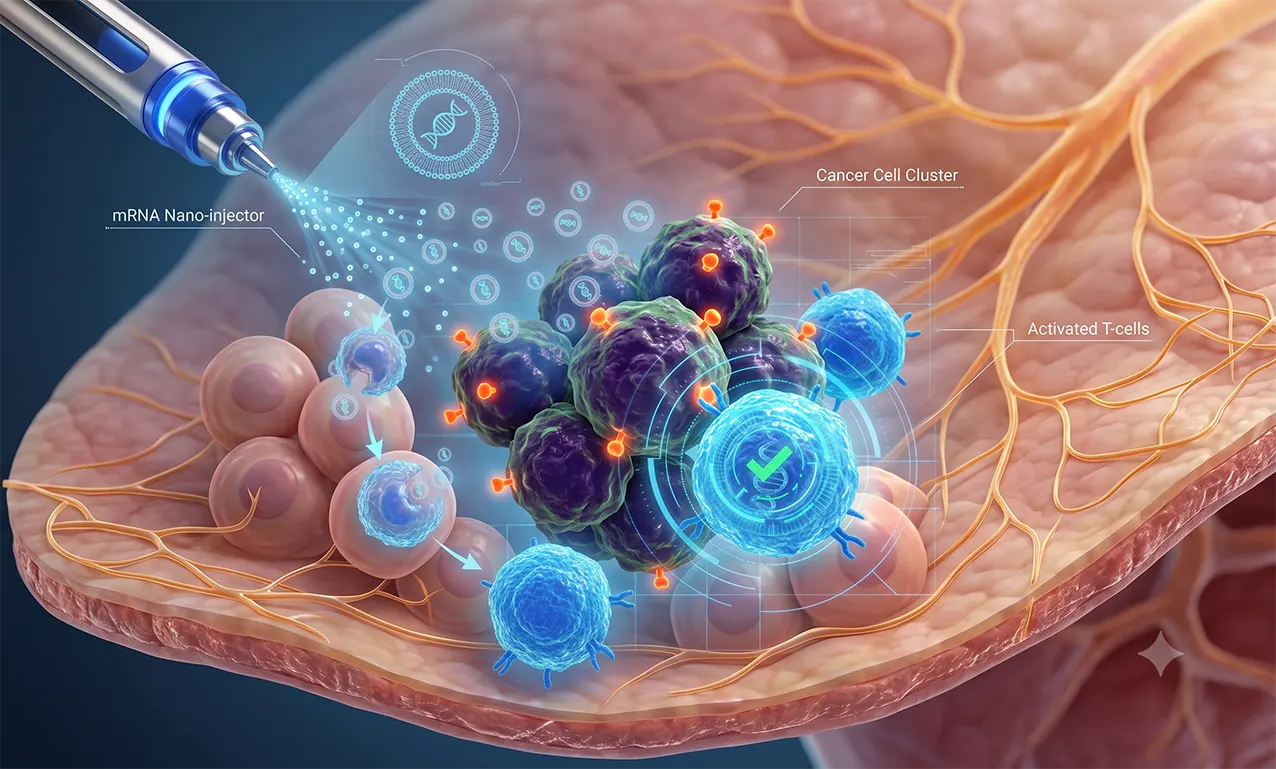
Lung cancer kills more people worldwide than any other cancer. For the first time, doctors are testing a revolutionary vaccine designed to fight it using the same technology behind the COVID-19 shot.
The BNT116 Vaccine and How It Works
The investigational vaccine, called BNT116, is developed by BioNTech and targets non-small cell lung cancer (NSCLC), which is the most common form of the disease. It utilizes mRNA technology to deliver genetic instructions that teach the immune system to recognize specific markers on cancer cells. Specifically, the vaccine targets six tumor-associated antigens that are frequently expressed in NSCLC. By teaching the immune system to recognize these molecular signals and attack them directly, the vaccine disrupts tumor development while leaving healthy tissue largely untouched. That is a meaningful shift from traditional chemotherapy, which typically damages healthy and cancerous cells alike.
The LuCa-MERiT-1 Clinical Trial
The Phase 1 trial, officially known as LuCa-MERiT-1, is currently running across 34 research sites in seven countries: the UK, US, Germany, Hungary, Poland, Spain, and Turkey. The trial is enrolling around 130 patients total. Participants span the full range of the disease, from early-stage patients who have just had surgery or radiation to those with advanced or recurrent cancer, and the vaccine is being given alongside immunotherapy to boost its clinical activity.
The first UK patient in the trial is a 67-year-old scientist from London named Janusz Racz. Racz received his initial doses in London, involving six separate injections given five minutes apart, each carrying different synthetic messenger RNA strands. This was followed by a longer maintenance schedule stretching over a year. After his initial round in August, Racz experienced mild, quickly resolved symptoms such as chills and rigors, and he has since tolerated the ongoing treatment without further issues.
Latest Status and Promising Updates
Recent updates from the clinical trials demonstrate substantial clinical progress and a manageable safety profile. Efficacy data presented by researchers shows highly encouraging early results:
-
In a 20-patient cohort treating NSCLC with BNT116 alongside the chemotherapy drug docetaxel, investigators reported an 85% disease control rate. Furthermore, they observed a 35% objective response rate in these patients.
-
Another cohort evaluated the vaccine in combination with cemiplimab, a PD-1 inhibitor. This group demonstrated an 80% disease control rate. It additionally showed a confirmed objective response rate of 45%. The median progression-free survival observed in these patients was 9.9 months.
-
Driven by these strong outcomes, the study evaluating BNT116 combined with cemiplimab has officially advanced to a Phase 2 trial.
-
Expanding on this success, the trial recently opened a new "RET cohort" at select locations in the United States. This expansion will allow patients with specific genetic alterations to receive BNT116 combined with RET inhibitors.
The Future of Lung Cancer Care
Leading experts have described this widely publicized research endeavor as the start of an exciting new era of cancer vaccine trials. If early results hold up, this could open the door to using the same mRNA approach to prevent lung cancer from recurring after treatment. Furthermore, researchers are already exploring separate DNA vaccines aimed at stopping the disease before it starts in high-risk individuals. Ultimately, as precision medicine evolves, the overarching goal of these targeted therapies is to transform terminal lung cancers into chronic, manageable conditions.